

Many businesses jump straight into design. They pick colors. They choose a logo. They build a website. But there’s a problem: without strategy, design is just guesswork.
Brand strategy comes first. It tells your designer what to build and why. Skip this step, and even a beautiful logo can send the wrong message.
This guide breaks down what brand strategy really means for businesses in Singapore, what the research says about its impact, and why it should always come before any design work begins.
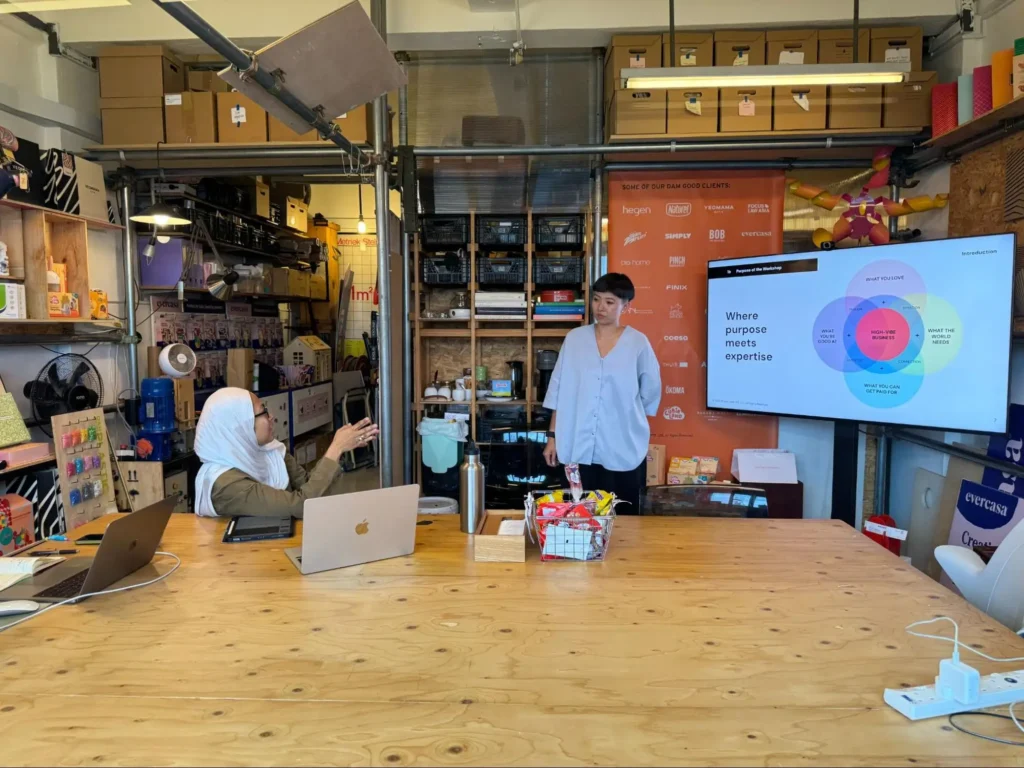
What Is Brand Strategy?
Brand strategy is your plan. It defines who you are as a business, who you serve, and why customers should choose you over competitors.
Think of it as the blueprint before construction. A builder doesn’t pour concrete without a plan. Your brand shouldn’t skip that step either.
The American Marketing Association defines brand positioning as setting your place in the market compared to competitors. That position then guides how you talk to your audience. In simple terms: strategy decides where you stand, and design shows it.
A solid brand strategy usually answers four questions:
- What does your business stand for?
- Who are you trying to reach?
- How do you want people to see you?
- What makes you different from competitors?
Once you have clear answers, design becomes much easier. Your designer isn’t guessing anymore. They’re building something with purpose, guided by a real market position instead of personal taste.
Why Strategy Must Come Before Design
Design without strategy is like decorating a house before you’ve drawn the floor plan. It might look nice. But it won’t work well.
Here’s what often goes wrong when businesses skip strategy:
- The logo doesn’t match the brand’s real personality
- Messaging feels inconsistent across platforms
- Customers get confused about what the business actually offers
- Rebrands happen too often, wasting time and money
A strong strategy prevents these problems. It gives every design choice a reason behind it. The color palette isn’t random — it reflects your brand’s personality. The tone of your website copy isn’t guesswork — it matches how you want customers to feel.
What the Research Says About Brand Strategy and Revenue
This isn’t just a design opinion. There’s data behind it.
Marq (formerly Lucidpress) surveyed more than 400 brand management professionals for its State of Brand Consistency Report. The findings show a clear link between a well-managed brand and business growth.
| What the Research Found | Data Point |
|---|---|
| Average revenue growth linked to consistently presenting the brand | 10–20% |
| Businesses that have brand guidelines in place | 85% |
| Of those, businesses that actually enforce those guidelines consistently | About 30% |
That gap matters. A brand strategy only pays off when you actually use it everywhere: your website, social media, packaging, and sales materials. A document sitting in a folder doesn’t grow revenue. A strategy that shapes every design choice does.

The Core Elements of a Brand Strategy
A complete brand strategy has a few key building blocks. Each one plays a different role in shaping your brand identity and how the market perceives you.
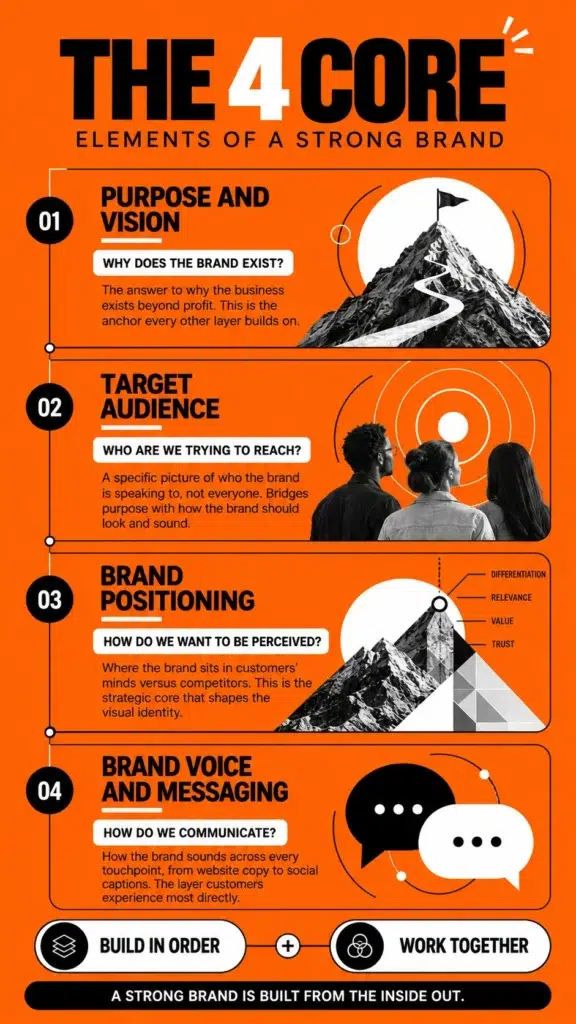
1. Purpose and Vision
This is your “why.” Why does your business exist beyond making money? What change do you want to create for your customers or community? A clear purpose builds brand equity that goes deeper than visuals alone.
2. Target Audience
You can’t speak to everyone. A clear picture of your ideal customer — their needs, habits, and pain points — helps you make sharper decisions about tone, channels, and offers.
3. Brand Positioning
Positioning is how you want to be seen compared to competitors. Are you the premium choice? The most affordable? The most innovative? Pick one lane and own it. Your visual identity gets built around this choice.
4. Brand Voice and Messaging
This covers how your brand sounds. Are you formal or casual? Playful or serious? A consistent messaging framework builds trust over time and keeps your team aligned, whether they’re writing a proposal or a social media caption.
Once these pieces are in place, your designer has real direction to work with. That’s when the visual side, your logo, color palette, and typography, starts to work in your favor instead of standing on its own.
Why Brand Strategy Matters Even More in Singapore
Singapore’s market is small but competitive. Many industries, from F&B to professional services, are crowded with businesses that look and sound alike.
A few local factors make brand strategy in Singapore especially important:
- A multicultural audience. Singapore’s customer base spans different languages, cultures, and expectations. A generic brand message often misses the mark.
- High competition in a small market. With limited space and a dense business landscape, standing out matters more than it does in larger markets.
- A market full of small businesses. About 94.7% of Singapore’s SMEs employ fewer than 25 workers, according to the Ministry of Manpower. Many owners compete against similar-sized rivals for the same customers. A clear position is often what helps one stand out.
Businesses that invest in strategy first also tend to build brands that last. They avoid the costly cycle of rebranding every few years just because the first attempt didn’t land.
What Strategy-First Branding Looks Like in Practice

Take STUDIO DAM’s work with The Dog Grocer (TDG), Singapore’s first sustainability-focused pet food store, as a real example of this process.
TDG’s challenge wasn’t a logo that felt outdated — it was a positioning gap. The brand had built a loyal niche audience, but its ambition was much bigger: to prove that “going green” isn’t a buzzword, and that it should extend to how people feed their pets too. Without a clear strategic position, that bigger mission risked getting lost in a category crowded with mass-produced, plastic-heavy competitors.
Before any visual work began, STUDIO DAM started with the strategy layer:
- Brand strategy and positioning — moving TDG from being seen as “just another pet shop” to a community hub for conscious pet owners, with a tone of voice that made sustainability feel like an invitation, not a lecture.
- Visual identity built around that position — rather than starting from scratch, the existing logo was retained and a more confident, minimal brand system was built around it, letting the product quality carry the story.
- Packaging aligned to the same strategy — sustainability wasn’t just a claim in the messaging; it was engineered into the packaging materials themselves, reinforcing the brand’s positioning at every touchpoint.
The result wasn’t just a brand that looked more polished. It was a positioning shift that carried through community growth, a simpler day-to-day packaging and labeling process, and a stronger claim to leadership in Singapore’s sustainable pet category — proof that strategy, not just design, was doing the heavy lifting.
What Happens When You Skip Strategy
Skipping strategy doesn’t always show up right away. The signs appear later.
Maybe your website looks great, but conversions are low. Maybe your social media has followers, but few of them become customers. Maybe your team struggles to explain what makes your business different from the one next door.
These are strategy problems, not design problems. No amount of visual polish fixes a brand that doesn’t know who it’s talking to or why it matters to them.
How STUDIO DAM Approaches Brand Strategy
At STUDIO DAM, we treat strategy as the starting point, not an afterthought. Before any design work begins, we take time to understand your business, your customers, and your position in the market.
This isn’t a one-size-fits-all questionnaire. It’s a process built around your specific goals, whether you’re launching a new business, refreshing an outdated brand, or preparing to scale into new markets.
The result is a brand that isn’t just visually appealing. It’s built to hold up under scrutiny, connect with the right audience, and grow with your business over time.
Ready to Build Your Brand the Right Way?
Skipping strategy might save time today, but it usually costs more down the road. If you’re planning a new brand or a rebrand, start with the foundation.
[Talk to STUDIO DAM about brand strategy →]
Sources: Marq, State of Brand Consistency Report · Ministry of Manpower Singapore · American Marketing Association, Branding
Frequently Asked Questions
What is brand strategy in simple terms?
Brand strategy is the plan behind your brand. It defines who you are, who you serve, and how you want to be seen, before any visual design begins.
Do small businesses really need a brand strategy?
Yes. Small businesses often benefit the most, since they have fewer resources to waste on rebrands or confused messaging. Research from Marq’s brand consistency study links strong, consistently applied branding to double-digit revenue growth.
How long does building a brand strategy take?
It varies by business size and complexity, but most strategy projects take a few weeks. This includes research, workshops, and defining the core brand elements.
Is brand strategy the same as branding?
No. Branding usually refers to the visual identity: the logo, colors, and fonts. Brand strategy is the thinking that shapes those choices. Strategy comes first.
How do I know if my business needs a brand strategy now?
A few signs usually show up together. You can’t explain what you do in one sentence, your look and tone vary across platforms, or you’re about to enter a new market or audience. If you’re planning a rebrand, strategy should come before any design work.